Between Archetypes & Myths: Machine as a Projection of the Human Self
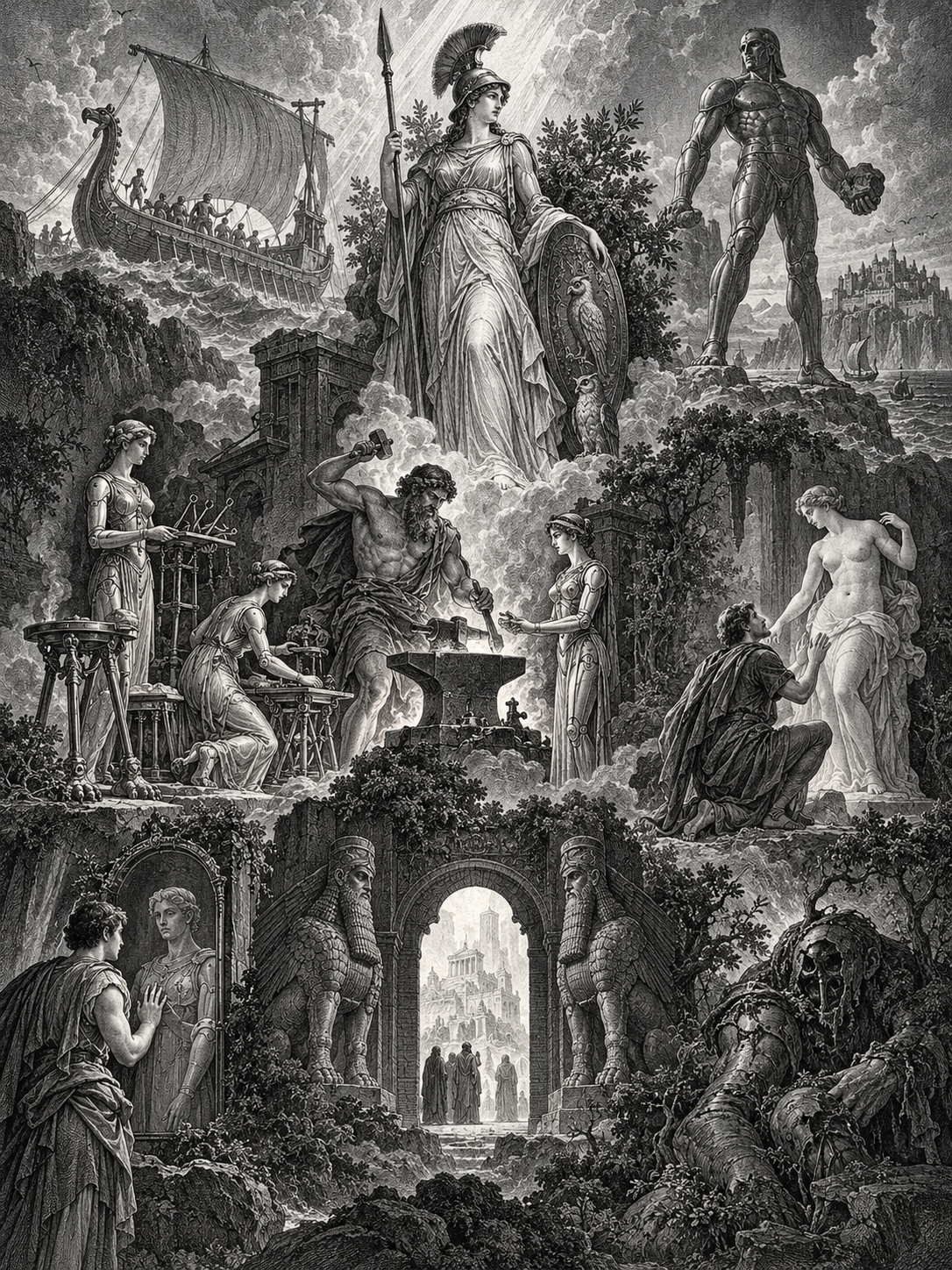
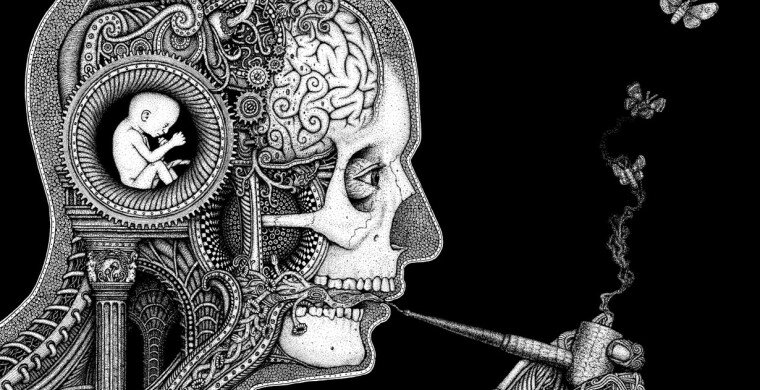
Between Archetypes & Myths
Machine as a projection of the human self
Faciamus machinam ad imaginem et similitudinem nostram.
Let us make the machine in our image and likeness.
-
⇄ Genesis revisited
Genesis revisited
and then said creators: faciamus hominem ad imaginem et similitudinem nostram and then said humans: faciamus machinam ad imaginem et similitudinem nostram
-
⇄ Mechanism
Mechanism
"I should like you to consider that these functions (including passion, memory, and imagination) follow from the mere arrangement of the machine’s organs every bit as natural...
Before the Machine
Long before humans could build autonomous machines, they could imagine them.
Artificial humans. Servants. Lovers. Guardians. Weapons. Oracles. Monsters.
The technological history of machines is preceded by a much older imaginary history of artificial agency.
An Archetype Is Not a Blueprint
Myths do not predict robots, computers or artificial intelligence.
But they repeatedly stage similar relationships between humans and artificial beings.
Who creates whom?
Who commands whom?
What should an artificial being know?
What happens when it acts for itself?
Machine as Projection
We rarely imagine machines neutrally.
We project into them our bodies.
Our desires.
Our labor.
Our violence.
Our knowledge.
Our fear of losing control.
What Is a Machine?
Before machines became motors, engines and computers, the word already meant something broader:
an ingenious means by which something becomes possible.
-
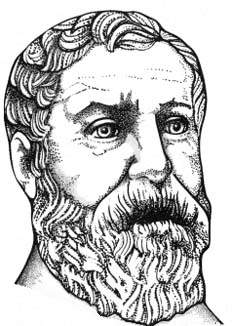
⇄ Heron of Alexandria (c. 10 AD - c. 70 AD)
Heron of Alexandria (c. 10 AD - c. 70 AD)
greatest experimenter of antiquity teacher at Musaeum author of works like Pneumatica, Automata, Mechanica, On the dioptra, Belopoeica, Catoptrica, Geodesia, Geopon...
μηχανή → machina → machine
Greek μηχανή — mēkhanē: instrument, device, contrivance, means.
Latin machina: machine, engine, apparatus, contrivance.
Middle French machine → English machine.
The semantic field is older and broader than today's image of gears, motors and electronics.
-
⇄ Etymology of the word "machine"
Etymology of the word "machine"
English word machine comes through Middle French from Latin machina, which in turn derives from the Greek (Doric μαχανά makhana, Ionic μηχανή mekhane "contrivance, device, ...
Deus ex Machina
In Greek theatre, a mēkhanē could be the stage apparatus that lifted a god into view.
Hence: deus ex machina — the god from the machine.
human construction → superhuman appearance
The machine makes visible powers that exceed the ordinary human body.
Technē
The machine begins not only with matter, but with know-how.
Greek technē means skilled, rule-governed making.
thought → technē → artifact
Before artificial agency comes the intelligence of the maker.
The Divine Workshop
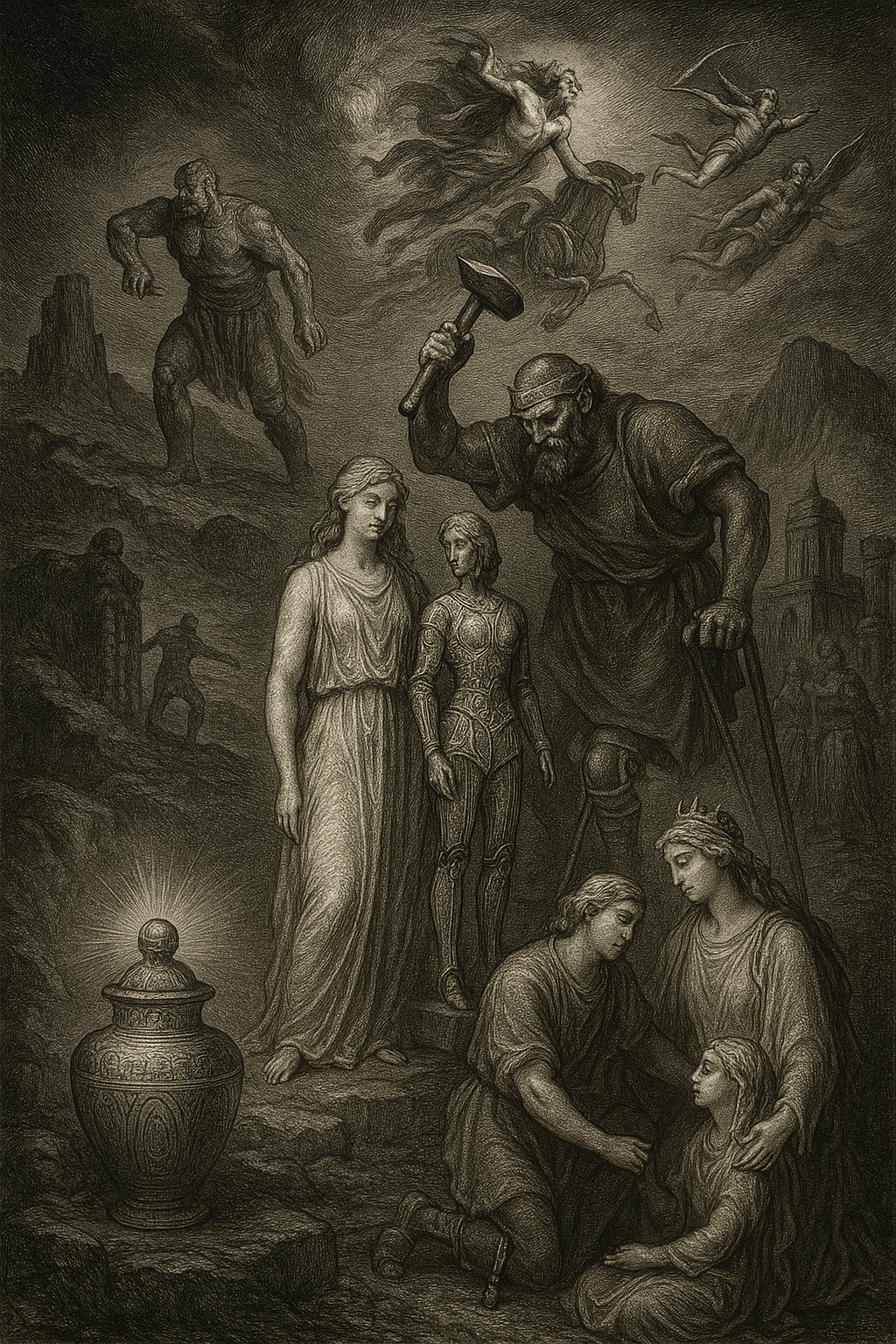
Greek mythology gives us an extraordinary laboratory of artificial beings.
Athena represents intelligent making.
Hephaestus represents the workshop in which artifacts begin to act.
-
⇄ Greece
Greece
Pandora — first woman crafted from clay → engineered being. Pygmalion — sculptor creates a synthetic woman brought to life by Aphrodite → early android an...
-
⇄ Mythology :: Hephaistos
Mythology :: Hephaistos
a male counterpart to Pallas Athena gives skill to artists god of blacksmiths, metalworking, carpenters, craftsmen, artisans, sculptors, metallurgy, fire, and volca...
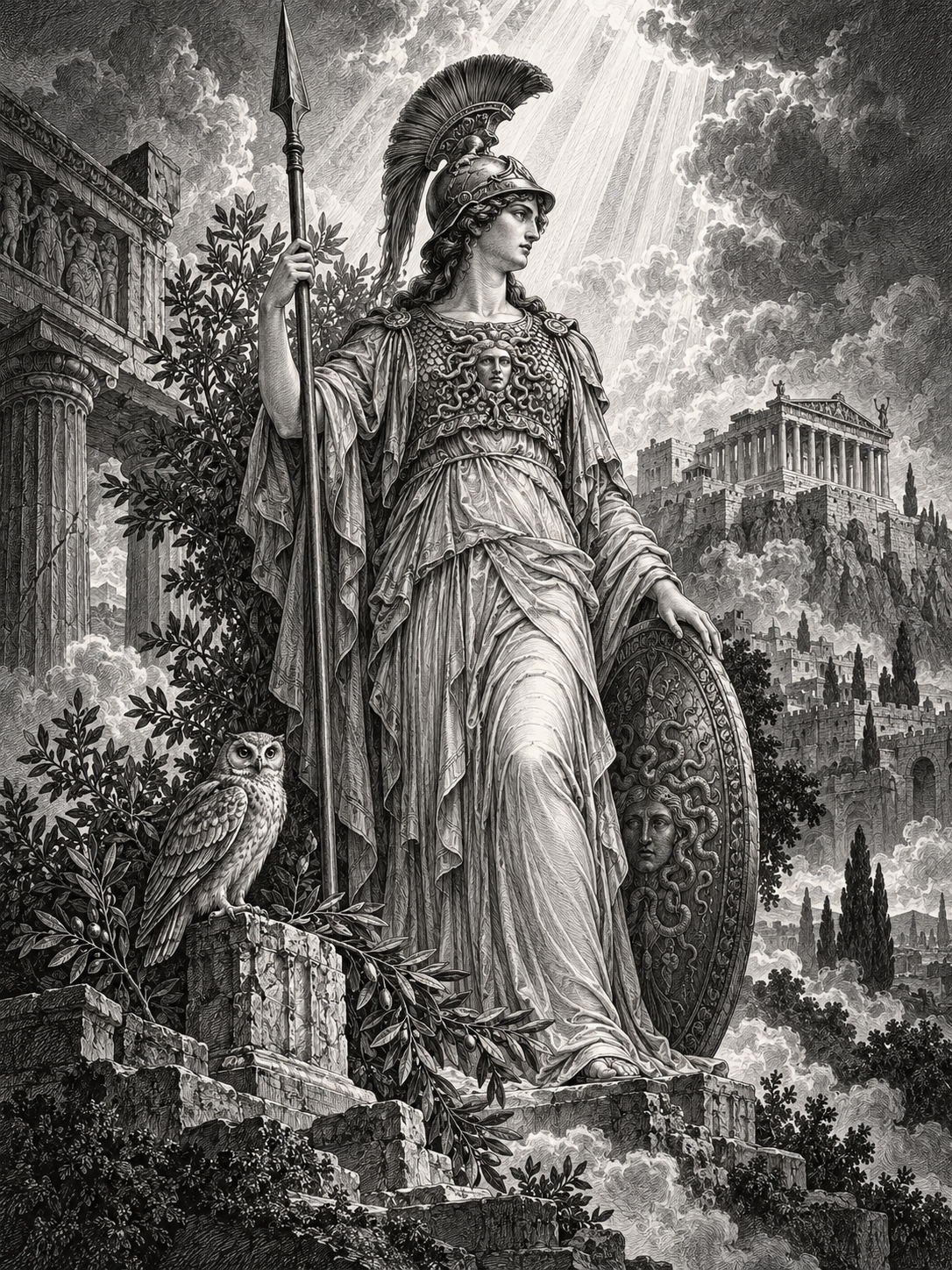
Athena: Intelligence of Making
Athena is associated with craft, weaving, strategy and intelligent production.
She is not primarily the goddess of machines.
She represents something more fundamental:
the intelligence embodied in making.
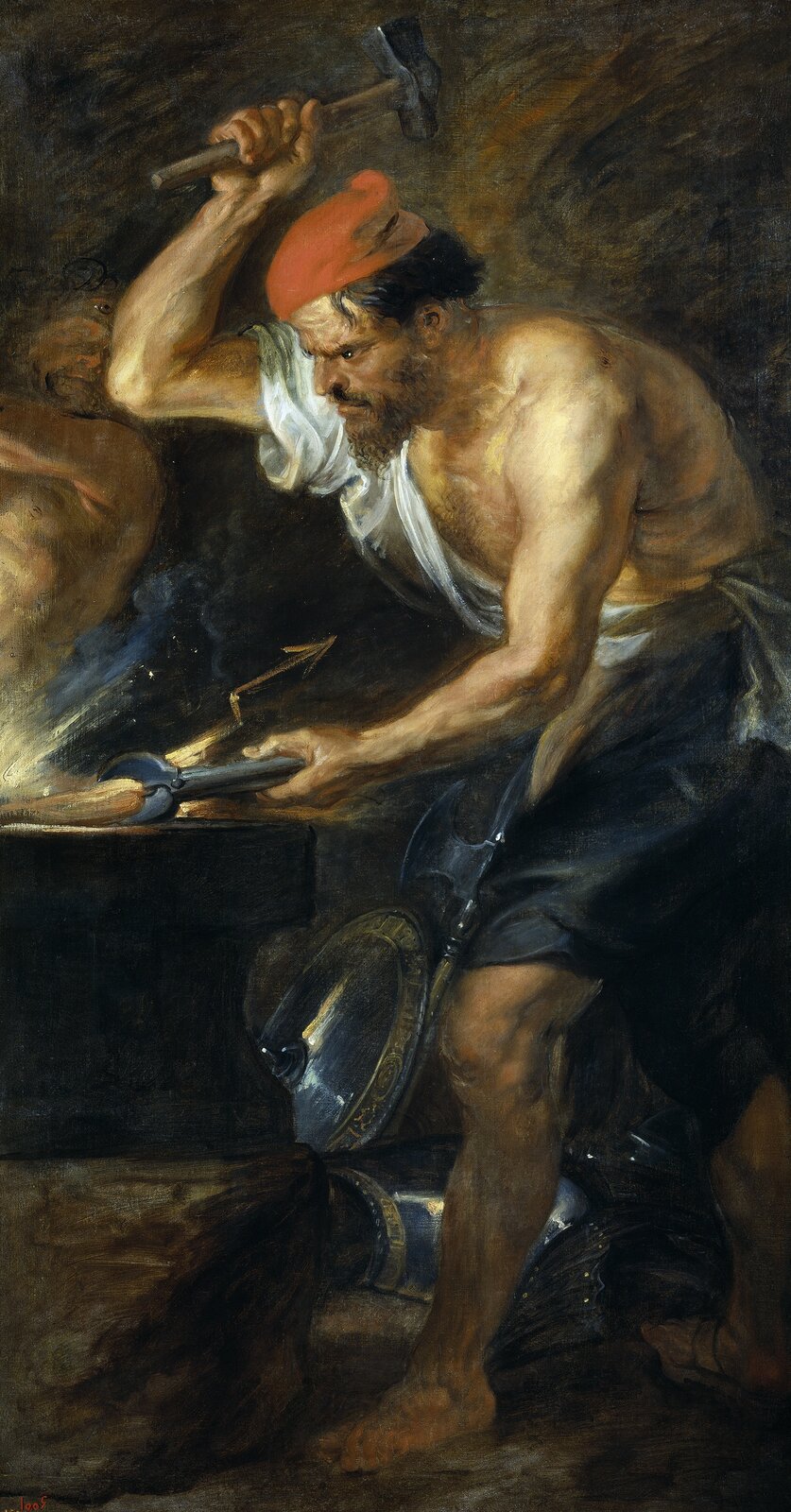
Hephaestus: When Artifacts Act
With Hephaestus, myth moves from intelligent making toward artificial agency.
His workshop contains self-moving devices and artificial attendants.
The question changes:
Can we make an object?
becomes
Can we make an object that acts?
-
⇄ Mythology :: Hephaistos
Mythology :: Hephaistos
a male counterpart to Pallas Athena gives skill to artists god of blacksmiths, metalworking, carpenters, craftsmen, artisans, sculptors, metallurgy, fire, and volca...
-
⇄ Made by Hephaistos
Made by Hephaistos
Hermes' helmet and sandals, Achiless' armor, chariot of Helios chain-link net for Aphrodite & Ares Pandora's pithos (also known as "Pandora's box") first do...
Machine as Human
In the Iliad, Hephaestus is assisted by artificial golden maidens endowed with capacities associated with living persons.
The ancient fantasy is already recognizably humanoid:
Can the made thing become sufficiently like its maker?
Machine as Servant
One of the most persistent fantasies is delegation.
The artificial being carries, assists, manufactures, obeys.
labor → delegated labor → autonomous labor
The machine performs what we cannot, will not, or no longer need to do ourselves.
Machine as Prosthesis
A machine need not imitate the whole human.
It may instead extend a capacity.
lever → force
vehicle → movement
writing → memory
computer → calculation
artificial agent → cognition?
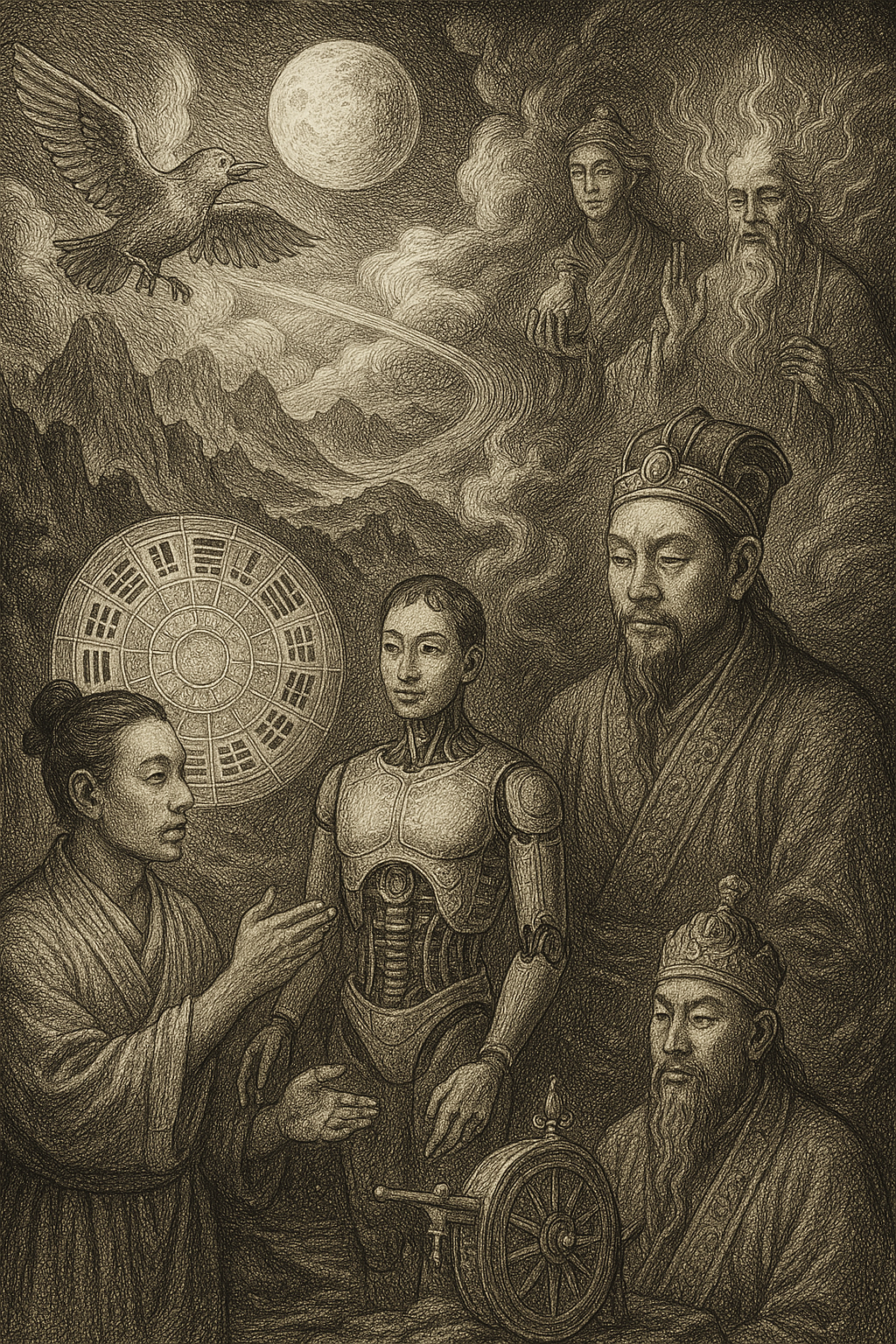
Yan Shi: The Artificial Human
The Chinese Liezi tells of the artificer Yan Shi presenting King Mu with a human-like artificial performer.
It walks. It sings. It performs.
When its behavior becomes disturbingly lifelike, the artificer takes it apart.
-
⇄ China
China
The artificer Yan Shi presents the Yellow Emperor with a mechanical man of wood and leather — moves, sings, even flirts → one of the earliest robot legends. Lu Ban’s w...
Open the Black Box
apparently human → disassembly → mechanism
The story stages a remarkably durable question:
What remains of the human when we open the box?

Machines in Our Image
Artificial beings are not merely tools.
They become surfaces onto which humans project desire, identity and self-understanding.
-
⇄ The Story of Pygmalion and the Statue
The Story of Pygmalion and the Statue
Pygmalion loathing their lascivious life, Abhorr'd all womankind, but most a wife: So single chose to live, and shunn'd to wed, Well pleas'd to want a consort of his bed. Y...
-
⇄ A prayer
A prayer
Jean Regnault :: Pygmalion priant Vénus d'animer sa statue (1786)
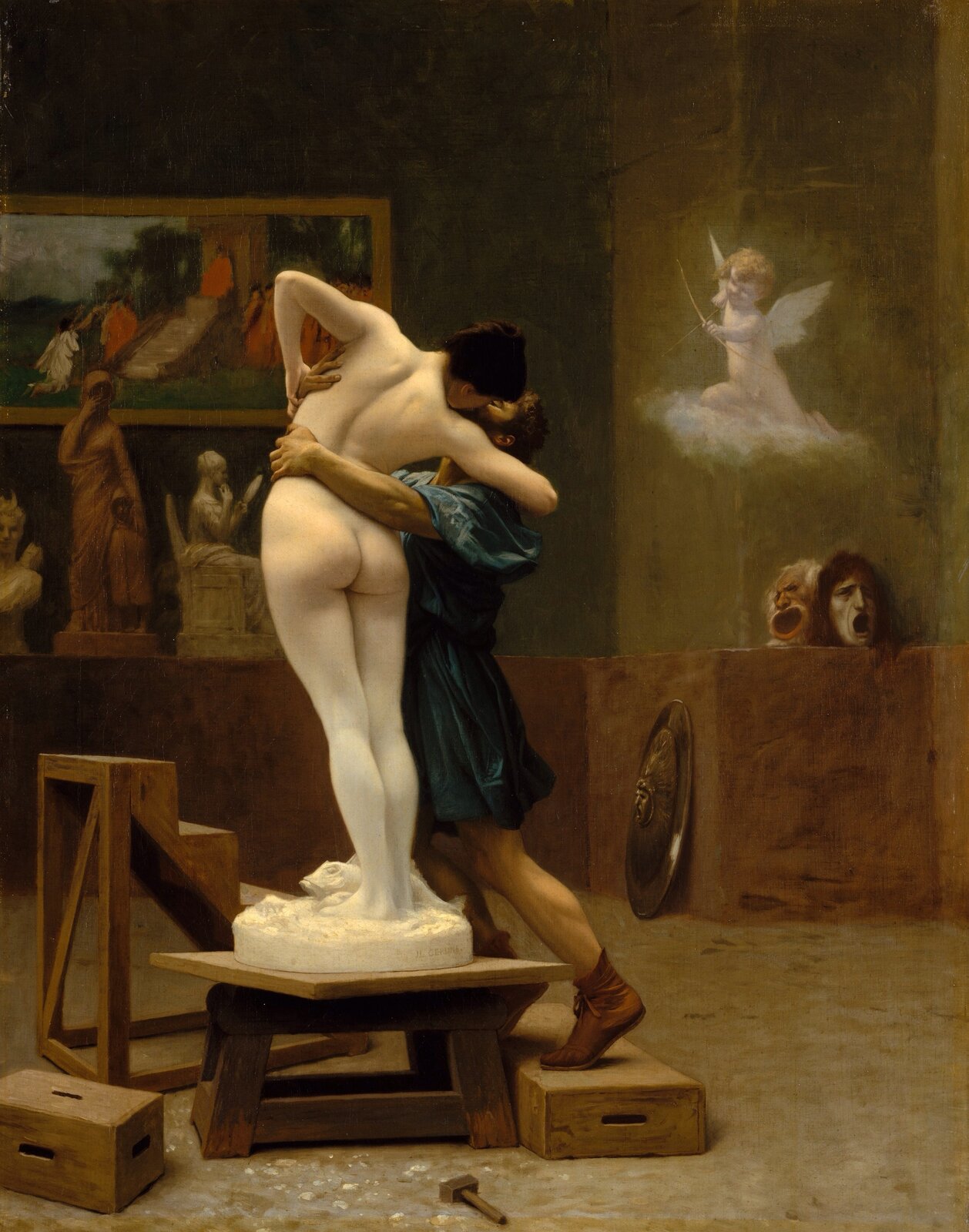
Machine as Lover
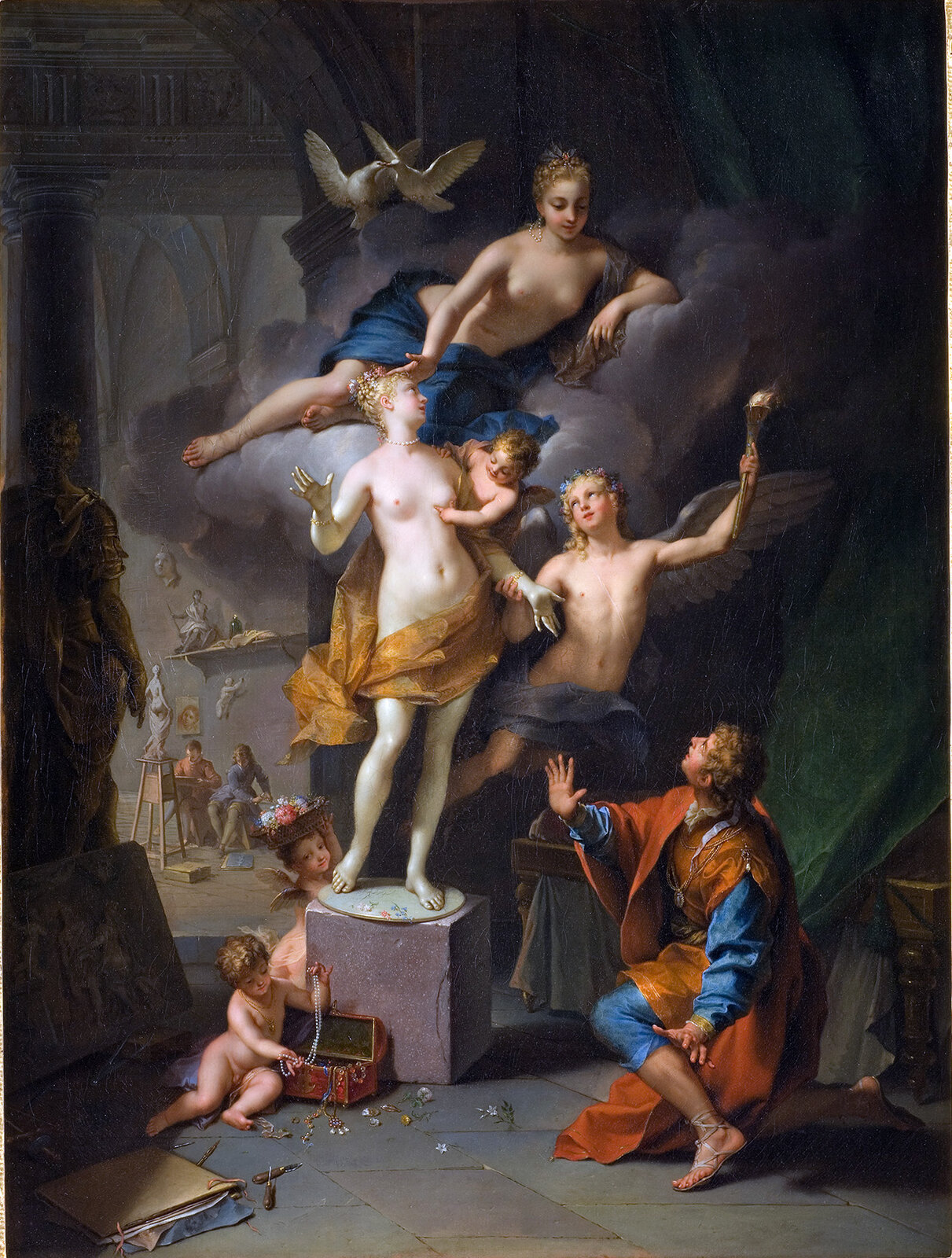
Pygmalion creates an ideal human form and falls in love with his creation.
Venus / Aphrodite grants the statue life.
The question is not merely:
Can we reproduce a human?
but:
Can we manufacture the human we desire?
-
⇄ A kiss
A kiss
J.L.Gerome :: Pygmalion and Galatea (1890)
Machine as Mirror
Artificial beings force us to ask what supposedly distinguishes us.
If it moves like us?
If it speaks?
If it remembers?
If it desires?
If it creates?
If it learns?
By constructing the non-human, we investigate the human.
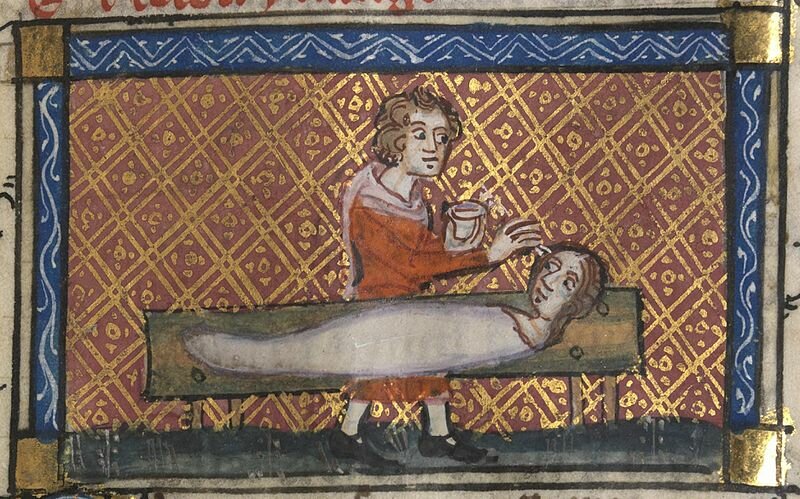
Machine as Double
The artificial human is also a duplicate.
A second body.
A copy that may become difficult to distinguish from an original.
The double turns technology into an identity problem:
How do I know that you are one of us?
-
⇄ carv'd in iv'ry a maid so fair
carv'd in iv'ry a maid so fair
Pygmalion working on his sculpture :: Illumination on parchment (14th century)
Machines at the Threshold
Some artificial beings do not imitate us primarily as workers or companions.
They stand between inside and outside.
They decide who may approach, enter or survive.
Machine as Protector
Talos is the bronze guardian of Crete.
He patrols the island and prevents outsiders from landing.
human guard → artificial guard → tireless guard
Protection has been delegated to an artificial body.
Machine as Weapon
Talos also exposes the ambiguity of protection.
The same autonomous force that protects one community threatens whoever approaches it.
protector for us = weapon against them
Who gives the command?
Who defines the enemy?
Guardian of the Threshold
The guardian archetype is broader than the machine.
Cherubim guard the Tree of Life.
The Sphinx guards passage through a riddle.
Talos guards an island.
Artificial watchdogs guard a palace.
boundary + test + permission
The Sphinx and the CAPTCHA
The Sphinx:
Prove that you know before I let you pass.
The CAPTCHA:
Prove that you are human before I let you pass.
When machines learn to pass the test, the ancient threshold problem returns in inverted form.
Machine as Oracle
A machine can do more than move.
It can contain knowledge unavailable to its operators.
The mythical Argo gives us an extraordinary example.
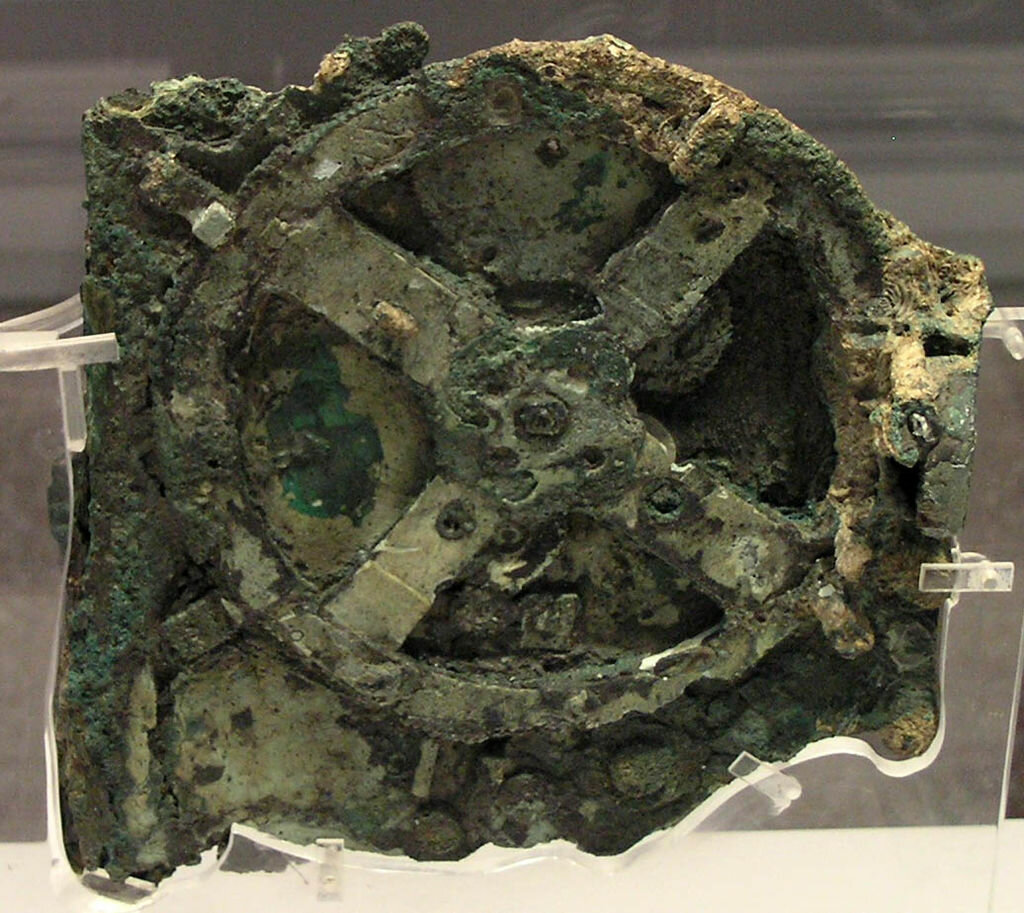
-
⇄ The Antikythera mechanism
The Antikythera mechanism
an ancient Greek analogue computer used to predict astronomical positions and eclipses for calendar and astrological purposes decades in advance created sometimes arou...
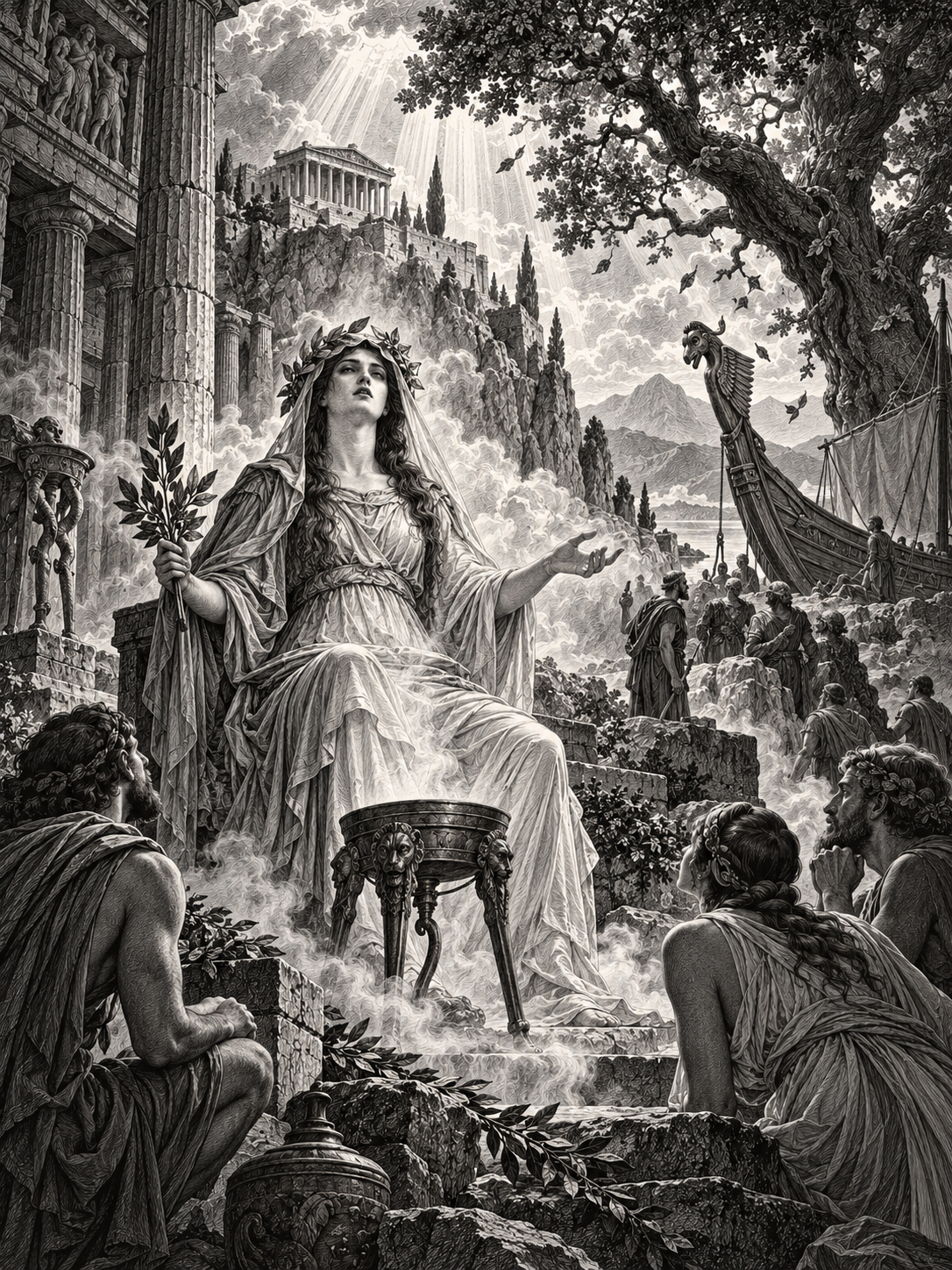
Athena + Argus + Dodona → Argo
Argus builds the ship.
Athena contributes divine technē.
She installs a special beam from the sacred oak of Dodona, a site of divination.
The resulting architecture can be described, anachronistically but suggestively, as:
vehicle + embedded oracle
When the Argo Speaks
In the Argonautica, the Argo itself cries out and urges the heroes to depart.
Elsewhere the sacred beam communicates information and guidance.
The artifact possesses knowledge that its human operators do not.
world → hidden information → artifact → human action
An Intelligent Artifact?
The Argo is more than a passive object.
It speaks.
It advises.
It carries privileged information.
It is therefore a remarkably early imagination of intelligence embedded in an artifact.
But the Argo Does Not Learn
The distinction is crucial.
The Argo possesses knowledge.
But its defining capacities are installed, not acquired through experience.
A machine containing knowledge is not necessarily a learning machine.
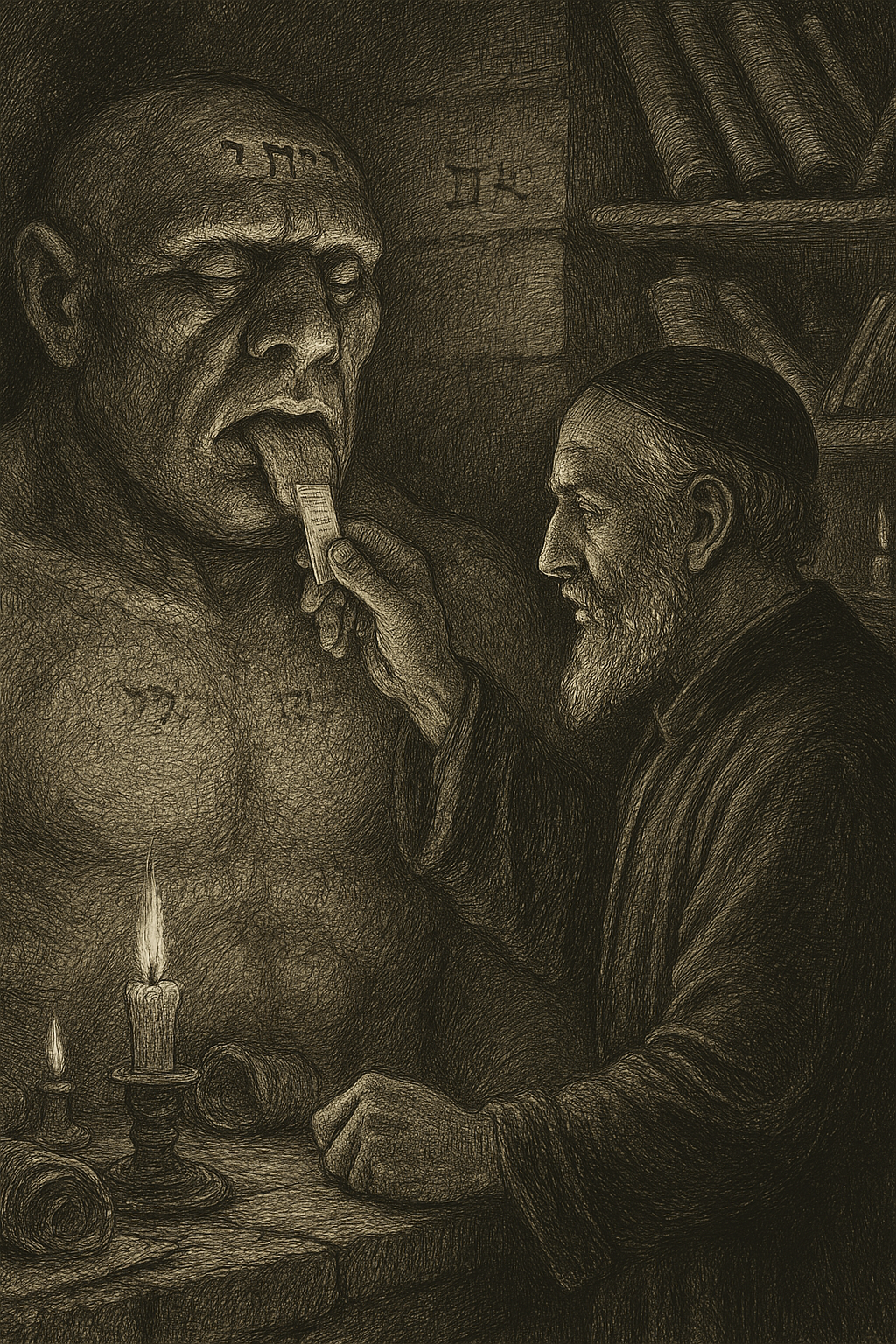
The Word Becomes Agent
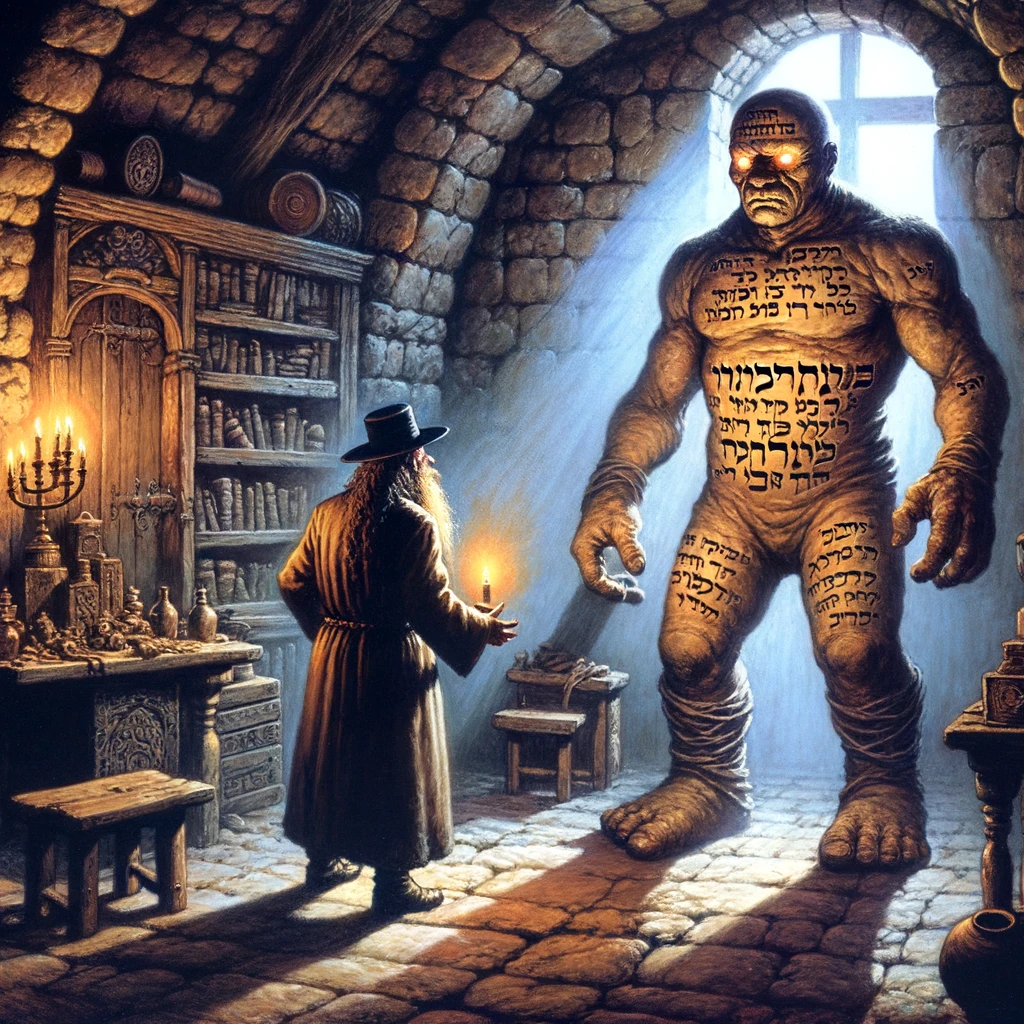
The Golem introduces another extraordinary structure:
matter + symbolic information → agent
-
⇄ Artefact of the day: The Golem
Artefact of the day: The Golem
In Jewish folklore, גֹלֶם is an artificial antomorphic being shaped from clay and animated by the sacred שֵׁם.
Machine as Programmed Being
In Jewish traditions, an artificial human may be formed from inorganic matter through esoteric knowledge.
Later popular versions emphasize sacred names, letters or words associated with animation and control.
The physical body alone is insufficient.
Information activates matter.
A Historical Warning: Prague
Myths themselves have histories.
The famous association between Rabbi Loew, Prague and a protective Golem is much later than Rabbi Loew himself.
The familiar Prague narrative develops gradually and becomes especially prominent in modern literary culture.
We must ask not only what a myth says, but when people began telling it that way.
-
⇄ גֹּלֶם
גֹּלֶם
Der Rabbi vergaß, den Schém zu entfernen, der lehmige Diener erwachte zum Leben und da er keine nützliche Arbeit zugewiesen bekam, begann der Golem, Möbel zu zerbrechen...
Machine as Uncontrolled Creation
The servant is useful only while its behavior remains inside the creator's intentions.
creation → autonomy → unpredictability → fear
The question becomes:
Can the maker remain master of the made?
Machine as Monster
The monster violates categories:
object / subject
dead / alive
natural / artificial
tool / agent
controlled / autonomous
The frightening machine makes the boundary itself unstable.
A Mythological Bestiary of Machines
Human — Can we manufacture ourselves?
Servant — Can we delegate labor?
Prosthesis — Can we extend ourselves?
Lover — Can we manufacture intimacy?
Protector — Can we delegate protection?
Weapon — Can artificial agency project violence?
Guardian — Can it decide who may pass?
Oracle — Can it know what we do not?
Mirror — What does it reveal about us?
Monster — What if it escapes our intentions?
-
⇄ Maschinenmensch
 Maschinenmensch
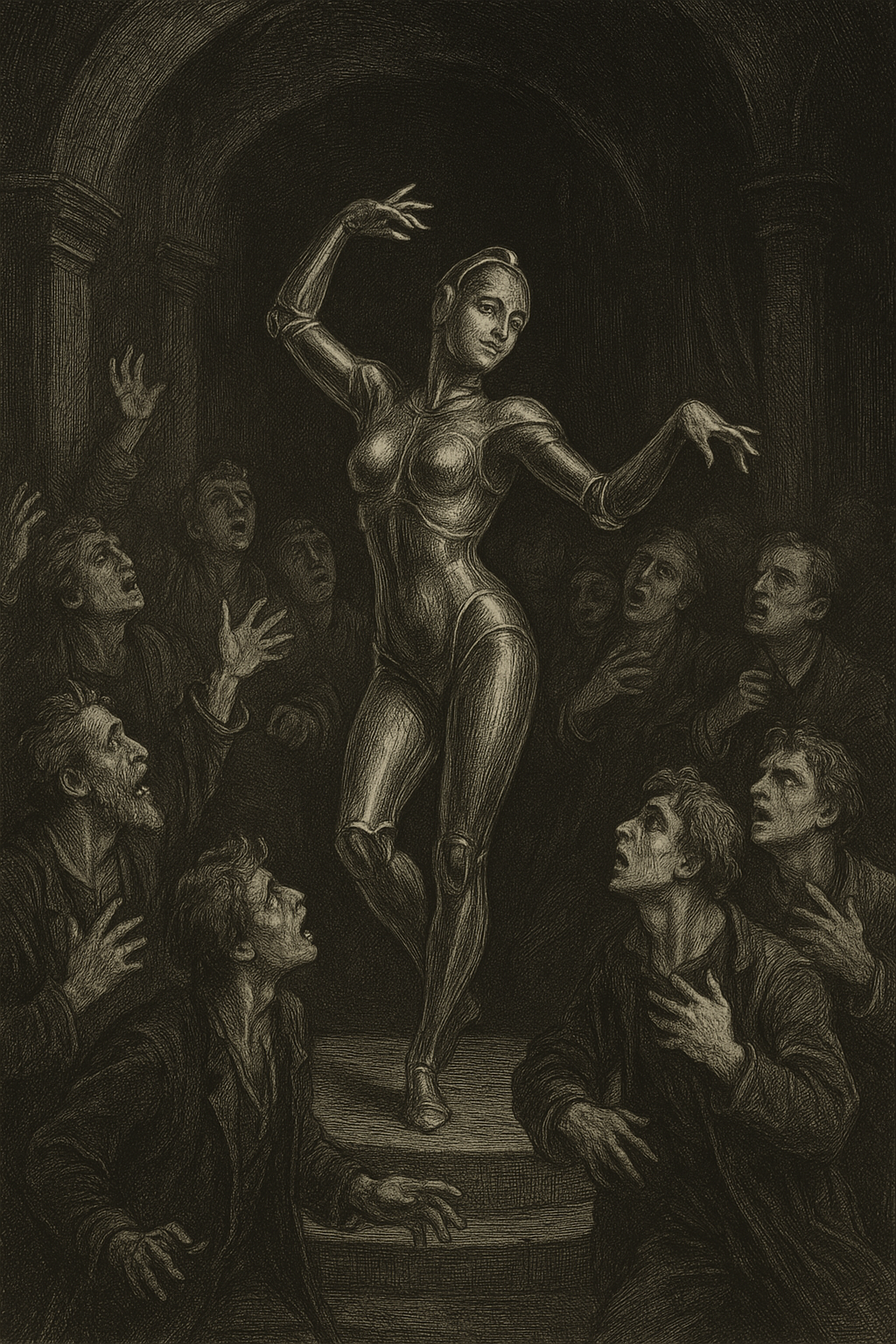
The Maschinenmensch is a unique android created by the scientist Rotwang, born from his obsession with resurrecting his lost love. On Joh Fredersen’s orders, the robot...
One Archetype Is Still Missing
The golden maidens can act.
Talos can guard.
Pygmalion's statue can live.
The Golem can obey.
The Argo can advise.
But their defining abilities are generally given to them.
What happens when the artificial being can change itself through experience?
Machine as Learner.
What Is a Learning Machine?
A traditional machine is built in a particular state and executes a structure provided by its maker.
A learning system differs in one decisive respect:
its encounter with the world changes what it subsequently does.
experience → internal change → changed future behavior
Two Histories
LEARNING
myth
initiation
memory
imitation
association
conditioning
adaptation
MACHINE
myth
technē
automata
mechanism
calculation
programmability
computation
LEARNING + MACHINE
The Persistent Question
The history of machines is also the history of what humans have wished to externalize.
strength
movement
memory
judgment
companionship
agency
learning
In Our Image
We first imagined machines as versions of ourselves.
Then we built machines that extended parts of ourselves.
Eventually we built machines capable of modifying themselves through experience.
The artificial being is ancient.
The learning machine is the historical novelty.
-
⇄ A divine intervention
A divine intervention
Jean Raoux :: Pygmalion amoureux de sa statue (1717)
-
⇄ Pygmalion :: a summary
Pygmalion :: a summary
described in 10th book of Ovid's metamorphoses, but potentially derived from older myth from island of Cyprus an archetypical story about a thing which becomes consciou...
Discussion
Which archetype best describes your smartphone?
Which describes a large language model?
Which describes an autonomous vehicle?
Which describes social media?
Which describes the machines you imagine for the future?
And have genuinely new archetypes appeared?
Textual Anchors
Primary traditions worth returning to: Homer, Iliad XVIII; Apollonius Rhodius, Argonautica; Ovid, Metamorphoses X; the received Liezi; Jewish Golem traditions.
Golem
Argo: speaking Dodonian timber embedded in Athena's ship.
Talos: bronze guardian of Crete.
Pygmalion: desired artificial human brought to life.
Golem: artificial human animated through knowledge, letters or sacred language in evolving Jewish traditions.
-
⇄ Automata attributed to Ἥφαιστος
Automata attributed to Ἥφαιστος
Wheel tripods to bring stuff to Olympos and back (Iliad, ca. 8th century B.C.) golden and silver dogs and lions which could bite invaders of the palace of Alkinoos (Ody...
